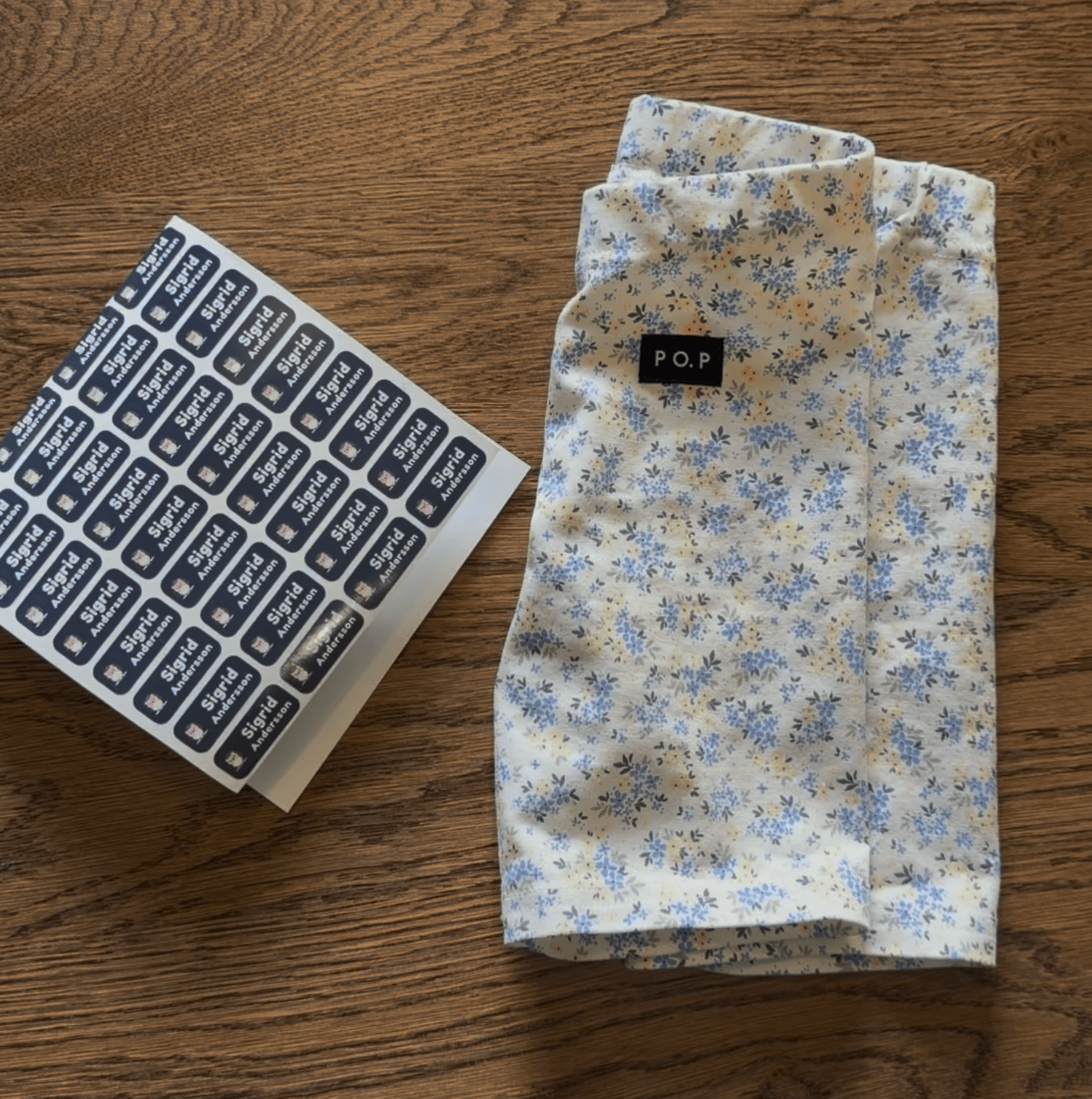
All Märka name labels are printed in Färjestaden, in the middle of Öland. It's the same town where the founder lives — walking distance between home and printing press. That closeness isn't accidental; it's part of how the company was built. In this article we try to explain why it actually matters that the name labels are Swedish-made and locally produced.
It started at preschool
The idea behind Märka came from Joel Carlsson, who lives in Färjestaden on Öland. Joel has a background in the printing trade going back to his early years — he knew the craft before he ever came up with the idea of starting something of his own.
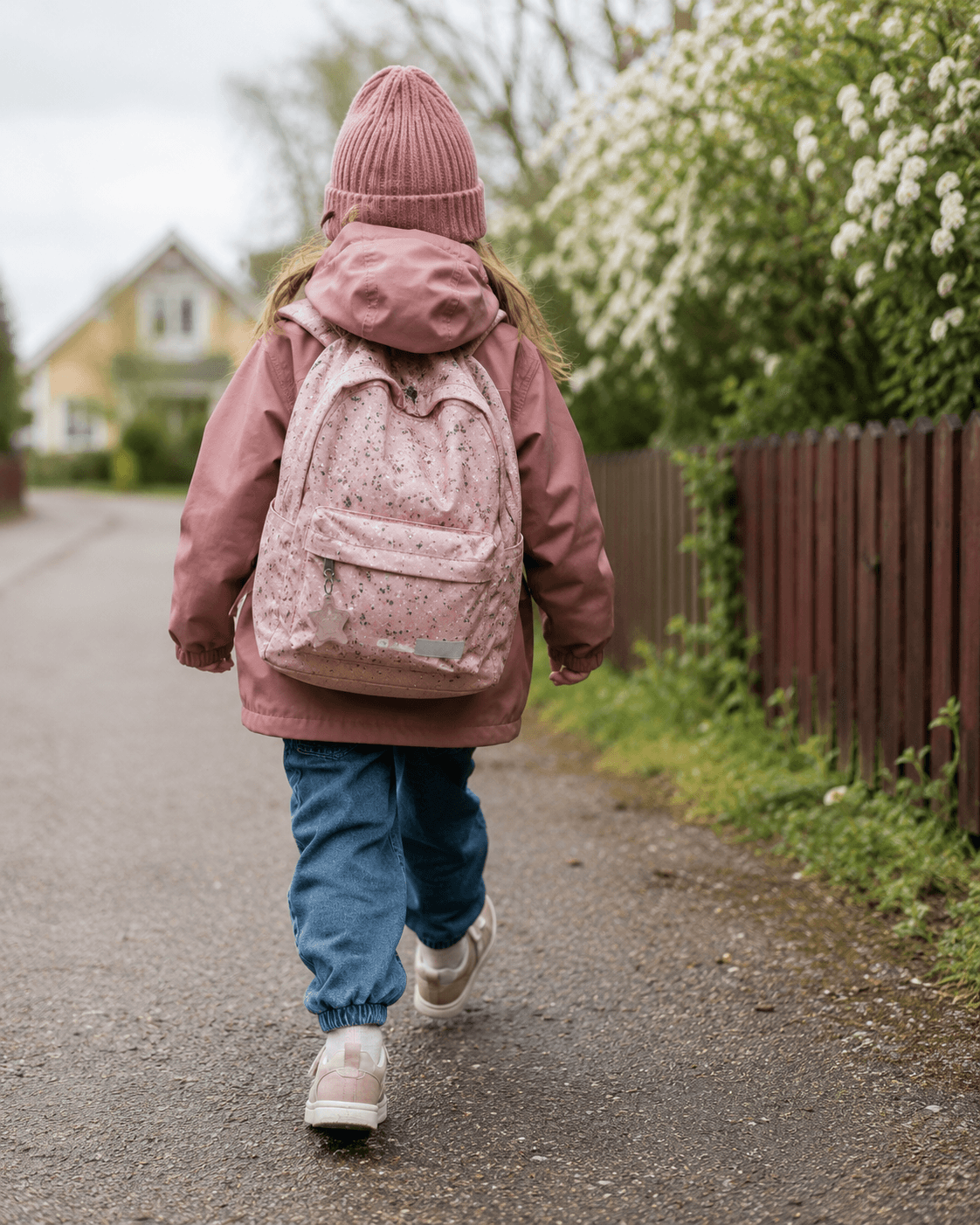
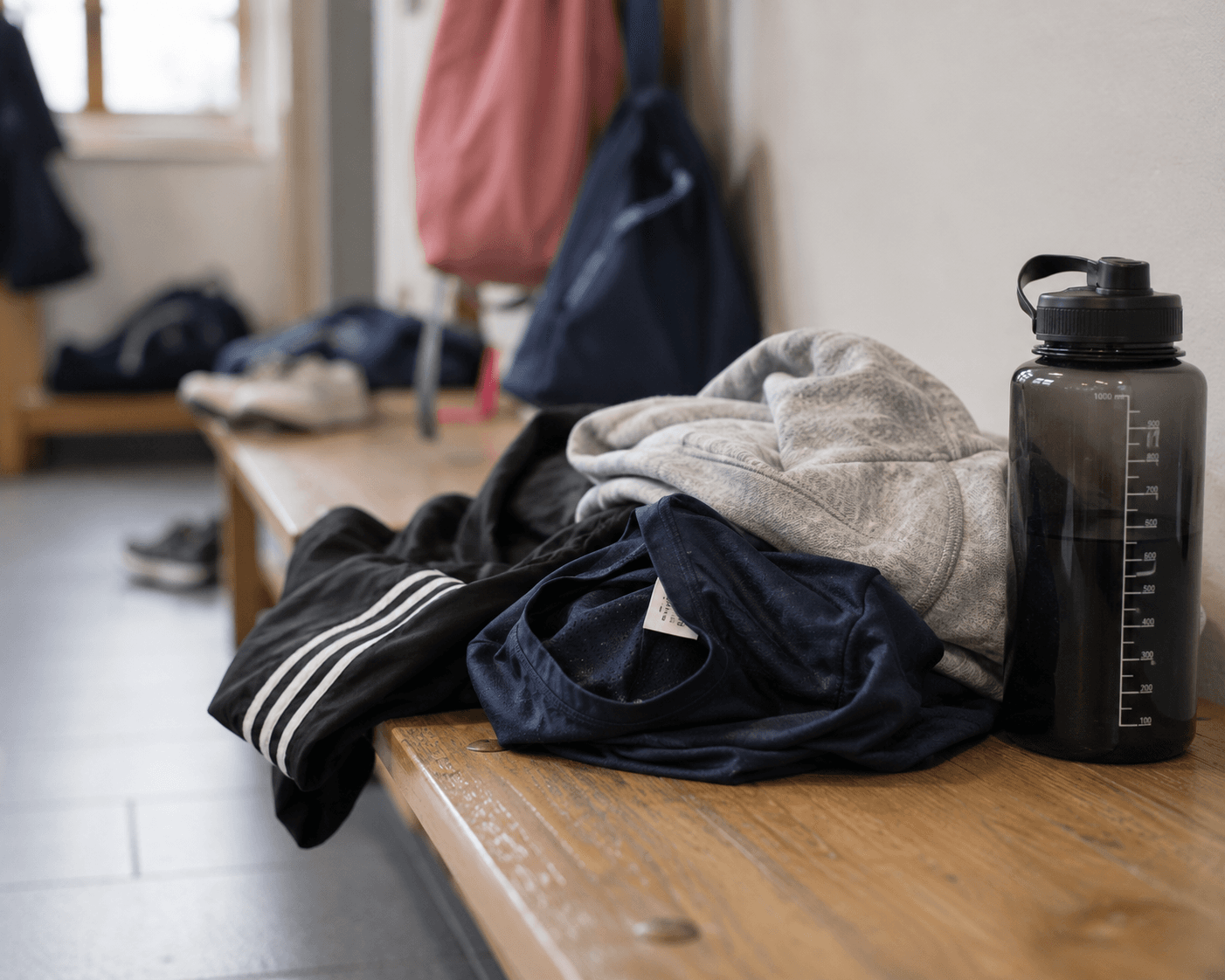
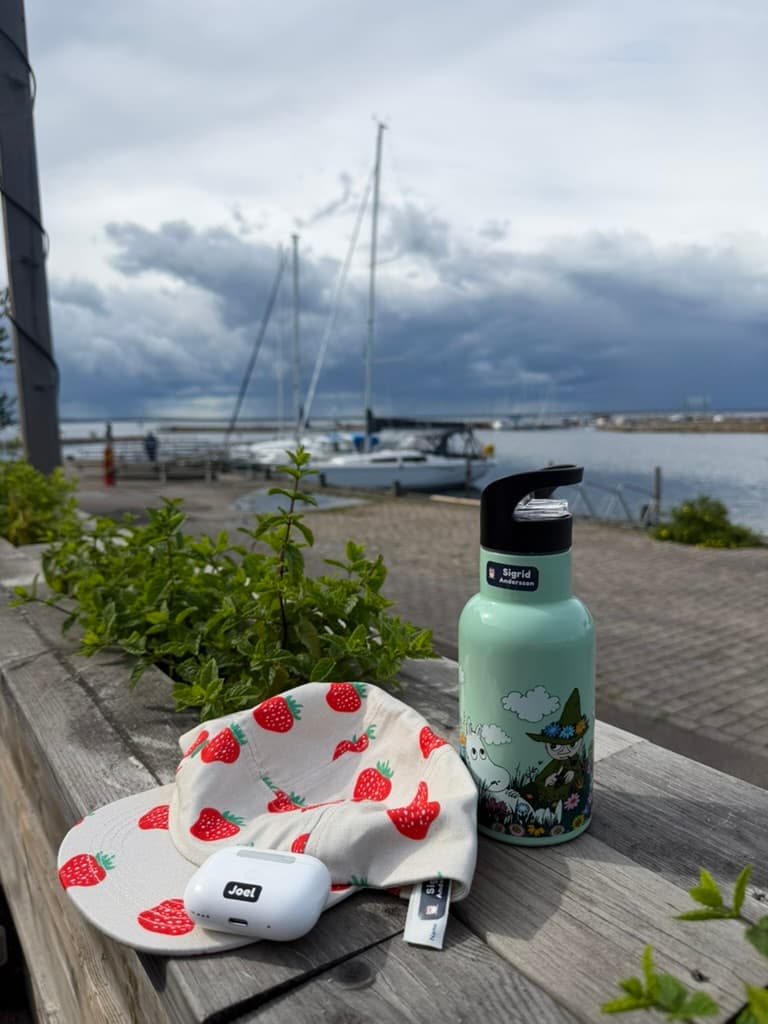
What tipped it over was preschool. Joel had never really thought about name labels — he didn't even know they were their own category of product — until they were requested when his own child was about to start. Suddenly mittens, hats, gym bags and water bottles all needed to be labelled so nothing got mixed up with twenty other children's things.
And from his time at the printing presses, Joel knew exactly how a good name label should be made to hold up — which materials survive repeated washing, which kinds of print actually stay put. That's where Märka began: a concrete need, combined with the knowledge to solve it the right way.
The print shop in Färjestaden
The print shop sits in Färjestaden, walking distance from where Joel lives. It's not a big, anonymous place — the entire chain, from an order landing to labels being packaged and ready to ship, is handled by one and the same person.
It's an unusual setup, and we chose it deliberately. When the same person handles every step, quality stays consistent. Nothing falls through the cracks. There are no "that's not my job" mistakes, no series of handovers where small details gradually get lost. Every order has someone behind it who holds the full picture — and who notices straight away if something doesn't look the way it should.
What local printing does for quality
The simple answer: when everything happens in the same place, nothing has time to go wrong without us noticing. If something isn't right, it gets caught immediately — by the same people who later stand behind the product.
It also means changes happen fast. If we want to try a new colour, a thicker material or fine-tune how a print sits, that's something we can do in an afternoon. We talk to the printer directly, and the next test print is on the table within the week — not next quarter.
It sounds tediously technical, but that's where good products become really good. The distance between an idea and a finished name label is so short that we can actually change things when it's needed — instead of living with compromises because they're too expensive or slow to fix.
A short chain, less to explain away
Sustainability is a word that wears out easily. For us it isn't, in the first place, about certificates or labels — it's about a name label printed on Öland and posted from there not having to make up for a long journey. No containers across oceans. No intermediate stops. No customs handling.
The material we print on isn't randomly chosen either. It's chosen to last — many washes, wear and tear, everyday life — and a label that lasts is, in itself, a form of sustainability. It doesn't need to be replaced, forgotten or thrown out.
A short chain — and a calmer product
For us, "Swedish-made" and "local" aren't marketing words. They're how we build something we want to stand behind ourselves. Everything that leaves Färjestaden in an envelope has been through one person who holds the full picture — and that, when it comes to small things that still matter a lot in a family with children, is roughly the order we want them in.