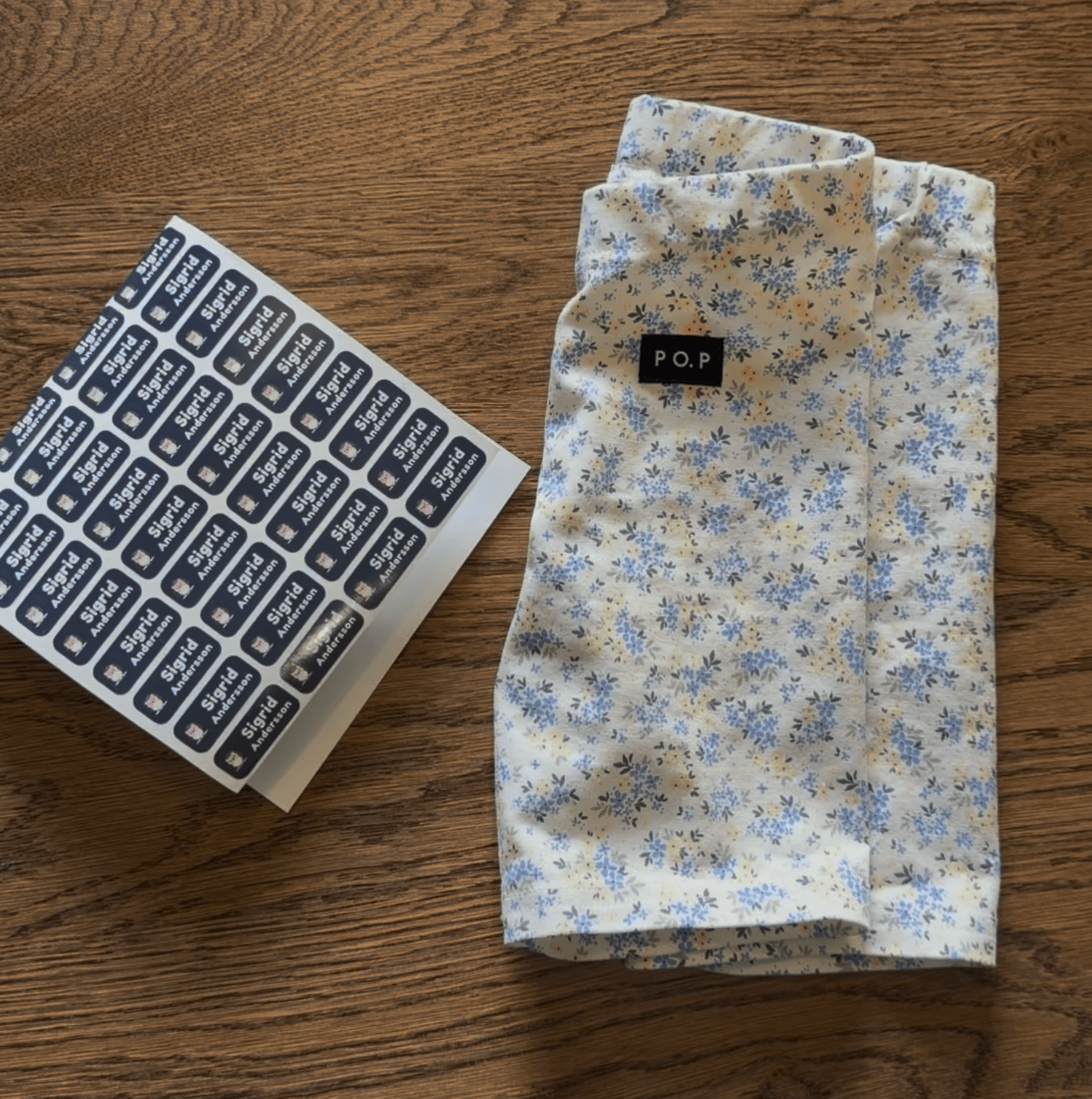
When you're looking for name labels for clothes, there are essentially three common routes: iron-on labels, fabric markers, and stick-on labels. They all work — but they differ in how much time they take, how long the labeling lasts, and how visible it is on the garment.
Here we go through the options, what suits when, what it costs, and answers to the most common questions — so you can pick what works in your everyday life.
Iron-on labels
Pros
- Often stay on very well
- Withstand many washes
- Look discreet on the garment
Cons
- Require an iron
- Take a few minutes per garment
- Easily become an "I'll do it later" task
In practice this means that every time you buy new clothes you have to dig out the iron. For many people it ends with a growing pile of unlabeled clothes.
Fabric markers
Pros
- Simple and cheap
- Work straight away without extra tools
Cons
- Hard to make it look neat every time
- The ink is permanent
The permanence can be a problem if you later want to sell the clothes on, hand them down to siblings, or donate them. Fabric markers are also hard to apply evenly — especially on small care labels.
Stick-on labels
Pros
- Fast to apply (a few seconds per garment)
- No tools needed
- Stay on through the wash
- Easy to remove if the garment changes owner
Cons
- Require the garment to have a care label to attach to
Stick-on labels attach directly to the inside of the care label and are one of the easiest options when you want to label many garments without extra steps.
Quick comparison
| Iron-on labels | Fabric markers | Stick-on labels | |
|---|---|---|---|
| Time per garment | A few minutes | Seconds | Seconds |
| Tools needed | Iron | Pen | None |
| Permanent | Yes | Yes | No |
| Withstand washing | Yes | Yes | Yes |
When does what fit?
Which option works best depends on the type of garment. Here are some common situations:
Baby and toddler clothes. These garments change owners quickly — the child grows out of them, the garment gets handed down to siblings or sold. Stick-on labels are preferable because they can be removed. Fabric markers become a problem when you later want to sell or donate.
Nice clothes and party wear. If you want the labeling extra discreet, iron-on labels can be a good choice — you can place them somewhere where they don't show from the outside at all.
Preschool and school clothes. Lots of garments where new ones keep arriving — and they need to be labeled quickly before the first day. Stick-on labels are fastest and require no tools.
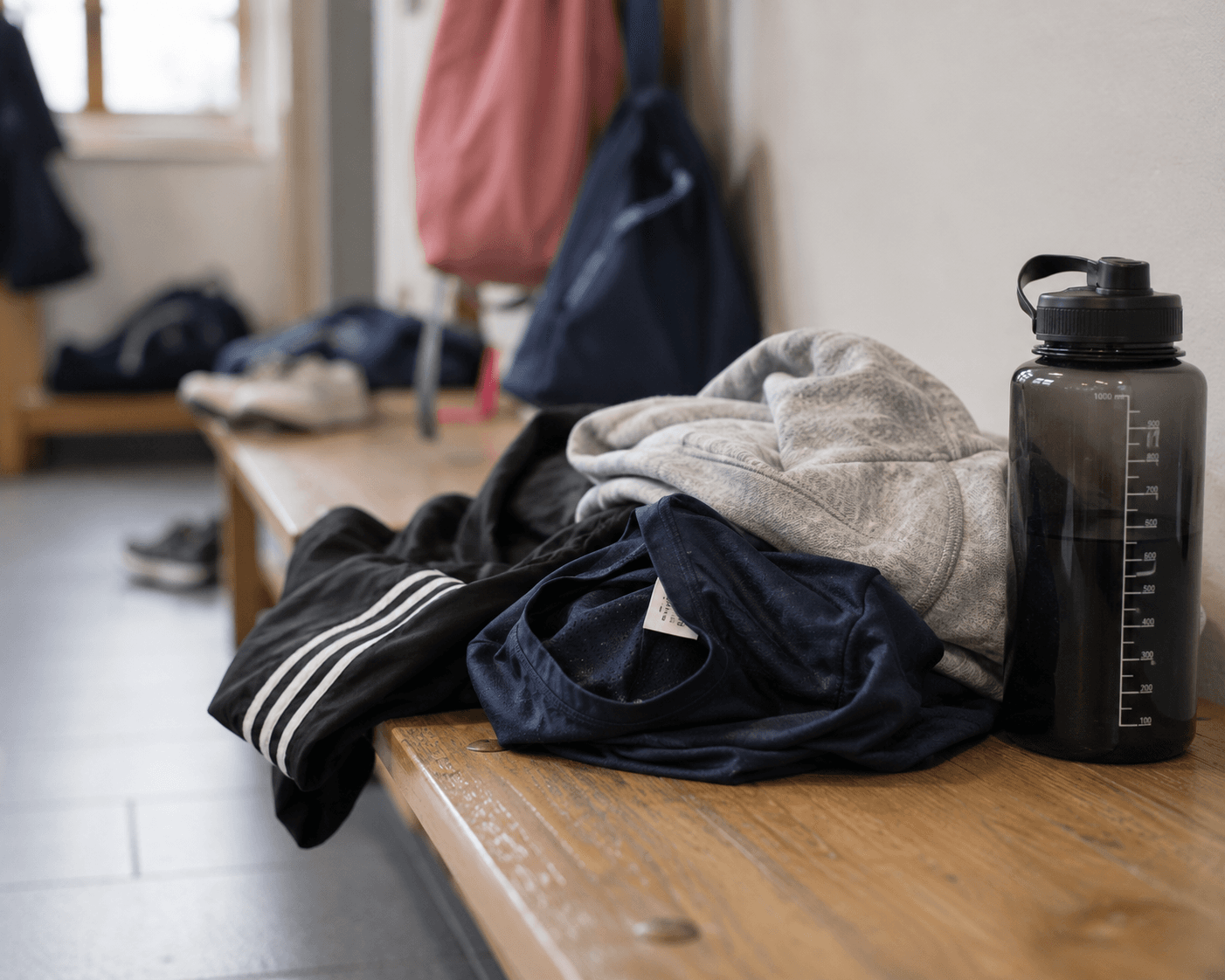
Sportswear and training clothes. Heavy wear from frequent washing — pick something that withstands many washes. Stick-on labels designed for care labels are made for this. More specific tips in our guide on name labels for sportswear.
Garments without a care label. Some underwear and accessories don't have a care label at all. Here, fabric markers work best, or iron-on labels in a discreet place inside the garment.
Care homes and elderly care. When many garments need labeling at once and laundry is done together — pick stick-on labels for fast handling with the name clearly visible.
What does it cost?
The price varies depending on supplier and how many labels you order, but rough price levels look like this:
- Fabric markers are cheapest up front — a marker often costs a small amount and lasts for many garments. The trade-off is the time you spend applying it.
- Iron-on labels cost a few units of currency per label, plus the time at the iron.
- Stick-on labels are at a similar price level per label as iron-on, but you save time because you skip tools entirely.
For a family with two children labeling a season's worth of clothes, the total cost usually comes to a relatively small line item compared to the clothes themselves — regardless of which option you pick.
What should you choose?
It depends on how you want it to work in practice.
Stick-on labels suit most people for everyday clothes — when you want it fast and want to skip extra steps every time you buy new clothes. Iron-on labels can be a better choice for nicer garments where you want the labeling extra discreet. Fabric markers work well as a temporary solution, or on clothes you don't intend to keep anyway.
Frequently asked questions
How long do stick-on labels last in the wash?
Stick-on labels designed for care labels normally last the entire lifetime of the garment — meaning many hundreds of washes. They're built to withstand hot washes and tumble dryers.
Do iron-on labels work on a down jacket or fleece?
Iron-on labels require the fabric to tolerate the heat of an iron. On fleece and thin synthetic fabrics, the material can melt — always check the garment's care instructions before you iron. Down jackets are often too delicate for iron-on labels.
What do you do if the garment doesn't have a care label?
Then stick-on labels won't work, since they attach to the inside of the care label. The alternatives are a fabric marker directly on the garment, or an iron-on label in a discreet place — for example under the collar or along a seam.
Which name label is best for baby clothes?
Stick-on labels work well on baby clothes — they're easy to apply in bulk, can be removed when the garment is handed down or sold, and sit on the inside of the care label so they don't irritate the baby's skin.
Do I need to label socks and underwear?
Yes, especially in preschool, care homes, or other settings where laundry is shared. Socks are the items that most often end up in the wrong place — so that's often where labeling makes the biggest difference.
Do stick-on labels work on every type of care label?
Most modern garments have a care label that stick-on labels adhere to well. On very thin or glossy care labels, adhesion can vary — but in the vast majority of cases they stay put over time.